Veiled in

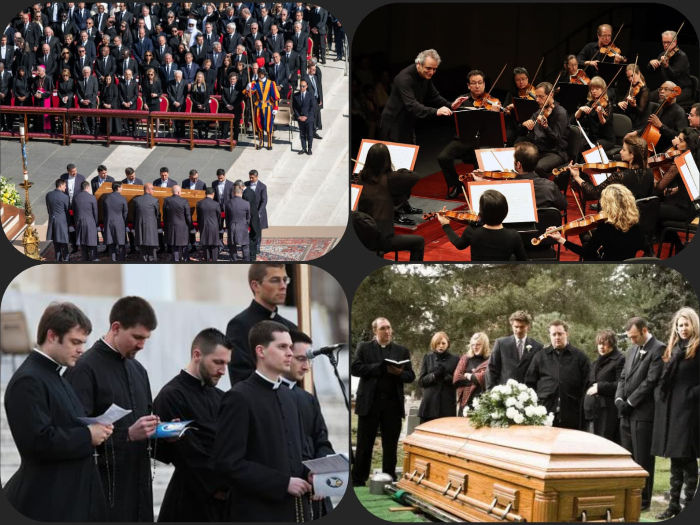
In many cultures, people wear black on special occasions. In the contemporary context, it seems to be very misunderstood. It is part of Western culture for those attending funerals,
formal professional events,
musical concerts, etc. to wear black. Similarly, in many upscale restaurants, the management would require waiters and waitresses to wear black uniforms. What is the basis for all this? What is the underlying concept behind all this?
In simple words, it is this: it is to move away from focus. In all the above situations, that is the desired outcome. Focus should not be. White or colorful clothes invite other people's attention to us. In that case, we become the center of attention of others. At a funeral, people wear black so that they are out of focus and the person who is going on the final journey stays in focus.
At a musical concert, instrumentalists on stage wear black so that the music, not them, become the focus and gain attention. (Sometimes, the vocalists are different).
Similarly, in restaurants, guests who come there should feel that they get visibility. That's the reason they require a black uniform for the waiters, so that they fade into the background. In many churches, the official cassock or habit of priests and monks is black. The goal is the same as above. They are not to be the center of attention. Black attire brings solemnness. Originally, black was not the color of death. That is how it has come to mean!
In the last phase of Lent, many Western and Eastern Churches cover the statues and images with a black or purple veil. In the Gospels, we read that Jesus retreated to the other side of the Jordan for a few days in order to make his death happen during the Passover. Usually we say that the figures and images are covered in churches to denote Jesus' going underground. However, the fact is that the figures and images are covered in this way to free us from external sights. That is, at this stage, even the figures should not distract our attention. With our eyes of faith we must be able to look beyond the externals. From the very beginning of Lent, flowers and other decorations were already removed from the church. Even the number of candles were reduced to a minimum. Instruments used at music were reduced or eliminated. Statues or images that could be avoided were also removed. But at this point even the crucifix is being covered. There is nothing to see in the church! When the external eyes are made to fast, the inner eyes must slowly get opened! The external forms are made out of focus. Just to bring the inner realities into focus!