Repent and Experience Our Communion with God and Humanity

Key Takeaways:
The article discusses Christian communion, the necessity of repentance to realize the Kingdom of God, and Jesus as the model for this life.
The text emphasizes that true repentance unveils Christlikeness and leads to social communion, peace, and justice.
Repent and Experience Our Communion with God and Humanity
As Christians, our faith in the Holy Trinity deeply inspires and invites us to live in a loving communion with all. We experience this communion in the life of Jesus, our Lord, who became human for the sake of humanity and offered a model through his social relationships. He reconciles humanity to God the Father by loving all and giving his own life, in the power of the Holy Spirit. Thus, he reveals the true purpose of human existence: communion with God and communion with humanity.
Communion: Our Character
How short our life is and how profound it is to be human! In goodness and true freedom, the human person, created in the image and likeness of God, is open to God and for all, while remaining uniquely distinct. Such an egoless person is joyfully oriented toward communion. This is our very nature, which we have experienced in those moments when we felt our equality with all as distinct persons and lived our mutual commitment during shared occasions. As Christians, we experience this transforming fraternal unity most deeply in the Holy Eucharist. In the Eucharistic sacrifice, we understand in our faith that though we are many, we are one in Christ, in the Spirit, and in the Father. The “one” is not a mere number, but the mystery of our oneness in the Trinity.
Perfect the Spirit of Communion in our Social Life
We need to witness the perfection of this communion experience of our oneness in our social life. For that, we need to include others in our life more and more by shedding our selfish-individualistic way of living, one that forms relationships with others not as persons who are eternally open to one another but as individuals identified totally with their cultural, religious, economic, ethnic and social structures, thereby tending to lose our dynamic oneness with all. This is an act of veiling our true joy in communion with all in our social life through creating a mask of ego by ourselves.
In our society, we may know each other, but can we care for others more as we care for ourselves? Can we remove the burdens of others by seeing them in the light of our interior wisdom, awakened from our true identity as the image of God, so that we may help them and participate with one another as one family in all our distinctness? Can we embrace others in our well-being, as we are the children of one Father, the perfection of goodness (Mat 5:48)?
To perfect our identity by unveiling our true nature as the image of God, Jesus wakes us to the Kingdom of God as a living reality of communion, here and now. So that we may experience joy in the spirit of God in our giving of ourselves for the other, because the other is the constitutive part of us in God the Father and Christ. For this, he invites us to repent, so that we may have life in fullness (Jn 10:10).
Repent and Believe in the Kingdom of God
Jesus began his public ministry proclaiming the Kingdom of God. For the realization of it, he invites all to repent (Mk 1:15). Repentance is a change of the mind, leading to the renewal of one’s entire being in God. It is “a radical reorientation of our whole life, a return, a conversion to God with all our heart, an end of sin, a turning away from evil, with repugnance toward the evil actions we have committed” (CCC 1431). Repentance is seeing everything through the eyes of God and witnessing God’s love in our action.
Access to the Kingdom of God and its effect in our lives are directly proportional to the depth of our repentance. Repentance is the door to enter the kingdom of God. It reveals our share in the Kingdom of God.
The Kingdom of God will be revealed in and through us to the world, depending on our conscious participation in the very life of God through our withdrawal from everything that is not divinely ordered. It reveals our conscious transformation into who we are truly, the image and likeness of God, through our conscious “no” to everything that causes us to worry (Mt 6:25-34) and our steadfast fixation on God alone. Every detachment, “no” to the worry, is our conscious openness to God through our “yes.”
The Kingdom of God is both our participative life in God as Christ’s image in the Spirit and God’s revelation of His love, transforming us through His Spirit into Christlikeness in the World. Christlikeness means our participation in Christ in his image through the grace of God (Rom 8:29). KG is our total conscious trust in God, who is revealed to us as our Father in heaven through Christ.
Jesus: The Path of our Repentance for the Kingdom of God
We can perceive the model of repentance in the human person of Jesus Christ, who was tested in the desert (Mt 4:1-11). In the desert, he was tempted by all the worldly ambitions. When we observe our own thought patterns as we look at the world, the same longings for the world, along with similar worldly inclinations, arise within our minds. Aroused by desire after seeing the alluring beauty of the World, we tend to attach ourselves to the sensual world by possessing it. Eventually, having been entrapped by the world through its deceptively confining luminosity, we may find ourselves struggling with problems and tensions that compel us to live in habitual worry.
Whereas Jesus, in the Spirit of God, recognized the nature of the thoughts in his mind. These thoughts had the potential to tempt him to surrender his freedom, peace, and ontological identity as a person open to God and humanity, to the glories of the world, thereby causing him to become lost in its worries. By the assistance of the Spirit of God, he discerned the true value of his life and the futility of worldly vanity and pleasures. In his freedom as a true person, and by his right choice, he entrusted himself to the sovereign ruler of this universe, God, the source and owner of his life.

Jesus: The Revealer of God’s Kingdom Attitude
In Jesus, we perceive God’s Kingdom and His righteousness made tangible (Mt 2:23-24). God the Father communicates His saving wisdom to humanity through Jesus, healing and enlightening them, caring for, and redeeming them (Mt 9: 12-13). This reveals the depth of God’s love for humanity, an inclusive love manifested and experienced in Jesus’ mission (Mt 15: 21-28; Lk 7:1-10). In him, God’s healing and mercy became accessible to Jews, Samaritans, Syrophoenicians, and Romans alike (Mk 1:40-45; Lk 17:11-19; Mk 7:24-30; Jn 18:10-11; Mt 9: 18-22). God, in Jesus, showed no partiality to humanity (Mt 5:45; Jn 4:4-42). He treated men and women equally. Moreover, he gave more importance to the outcasts, the suffering, and the rejected. Thus, in his mission, the Kingdom of God reveals Jesus’ human and divine nature (CCC 467, 481) manifested in communion with God and humanity, as the complete person and the perfect model for all humanity.
Similarly, we, humanity, are called to live Jesus’ life through our repentance. It is our sharing in the life of God, in whom we experience our perfection to lead both a fully human and divine life in Christ (CCC 1934), which witnesses our communion with God and Humanity simultaneously.
Repentance: Acceptance of the World in God
Repentance is not a denial of the world. It is rather a withdrawal from viewing the world as everything for our existence, as if the world alone is giving us existence and beyond which there is nothing. It is turning away from the mindset that tempts us to use everything, including our worship of God, for serving the belief that the world alone is our ultimate purpose.
When we identify ourselves with the notion that the world alone is everything for our existence and attach ourselves to the world in this way, we become limited and separated from others. This individualistic understanding breeds competition within us, driving us to accumulate more and expand our storehouses for our existence in a selfish manner. Such an individualistic and self-centred attitude, destructive, biased, unbalanced, dominating, and self-serving, stands as a witness against the Kingdom of God. This chaotic and divisive phenomenon, which both creates and extinguishes the vulnerable, is indeed the creation of humanity, having veiled our innate potential, the true ‘we,’ to love all. When we withdraw from all these tendencies, by the power of the Holy Spirit dwelling within us and through our divine discernment (Mt 10:16), we begin to encounter within our own person that we are the image and likeness of God as revealed in the sacred scripture (Gen 1:26), and perfected in Jesus Christ. Then we will truly witness God’s Kingdom as another Christ in our relationship, so that in humility we may say as Jesus said, “the Father who dwells in me, does his works” (Jn 14:10), and as St Paul confessed, “It is no longer I who live, but Christ who lives in me” (Gal 2:20).
Repentance: Unveiling of the Kingdom of God as the Manifestation of Relationality
Repentance unveils our innate absolute openness to God in our freedom. It reveals our inherent love for God and for God’s creation, loving as God loves (John 21:15-18). It discloses our choice for God and His Kingdom. The Kingdom of God is just hidden in the distance of our true repentance. Repentance reveals the joyful act of witnessing and experiencing God’s love for us and for the world, through us as His image and likeness. Thus, the Kingdom of God is neither an objective nor a subjective reality but purely a relational reality unveiled through our true repentance. Repentance, therefore, is a holy invitation to sense and live our personal communion with God, in distinctness and in oneness, manifesting an order of love, peace, and justice in our society through the act of God in His righteousness, ensuring solidarity and fraternity of all.
Repentance: Restoration of God’s Image and likeness in Us through Christ
Jesus, in himself and in his relationship with all, has given us a model to follow. The proclamation of Jesus calling us to repent is an invitation to be aware of our Christlikeness in him, for we share in his image and likeness, and he has perfected this image and likeness in himself. Owing to this, Jesus the Christ, at the Last Judgement, will ask whether we were able to see the Son of Man in the least of the people. Whenever we serve the least, we serve the Son of Man (Mathew 25: 31-40). Have we served the Son of Man as he envisions? For Jesus does not see humanity as separated from himself.
The Son of Man perceives himself in all humanity, especially in the least of humanity. Therefore, we are Christ in a hidden manner. From this, through our faith in Christ, we come to understand that the human person is none other than Christ’s image. We need to ponder this mystery and reality very seriously and realize our Christlikeness as perceived by the Son of Man. True repentance unveils our Christlikeness in Christ, in communion with God and with all humanity. Thus, in our practical life, in our society, though we are many, we are still one in Christ. Repentance reveals our unity in the Trinity. It erases our individualism and bears witness to our shared existence, as we live as persons in communion, caring for the whole of humanity, which leads to peace and righteousness in society.
Repentance: Living the Kingdom in Communion
In the path of repentance, we offer ourselves as an acceptable sacrifice to God the Father, as His children in the Spirit of Christ (Rom 8:15-16; Gal 4:6). All our acts and thoughts are offered to God in Christ’s attitude and in his Spirit. Through this offering of sacrifice, we care for the well-being of all tangibly as God’s stewards (1 Peter 4:10; Mt 25:14-30). For our sacrifice to God is simultaneously manifested in our service to ‘all’ our neighbours indiscriminately. Because we witness God’s love manifested as our service for our neighbours, His Children. Thus, our giving of ourselves to God as sacrifice, God’s love for us and humanity through His fatherly care are fused in our service to others, revealing that we are one community in communion. Thus, symbolically, God the Father is the hub of the wheel of communion through which we are all connected as one. Christ is the outer circle of the wheel through which we are all connected as one. The Spirit is the spoke or the bridge that unites the outer circle and the hub of the wheel. In this communion, every offering of myself to God is a simultaneous offering to the world for its well-being. Both these aspects, an offering of myself to God and the world, cannot be separated from each other. Thus, the world is the temple of God or the Kingdom of God.
The evil and chaos in this world are the result of our choices and subsequent actions. Peace and righteousness in the world are also the consequence of our choice out of our freedom, both by our participation in the life of God and by the grace of God. Still, these peace and righteousness are the expression of the Kingdom of God, manifested through God’s action, and are perfected through our complete participation in God. Ultimately, authentic repentance opens us to loving all as God loves. Cardinal Walter Kasper, in his book Jesus the Christ, expounds that “the age of the coming Kingdom of God is the age of love which requires us to accept each other unconditionally.”
Transforming Repentance: Witnessing a Loving Humanity in God
We need to be aware of and experience our human life and its divinity through a self-arresting and transforming wonder at what we are, through our openness to and communion with both God and humanity. The second person of the holy Trinity, Jesus the Christ, is the model of what we must be and what we are. Our repentance transforms us into God’s Kingdom in His image and likeness through our being as persons by His Grace. Thus, we live in God as one family through our intrinsic relationship, manifested in our solidarity with humanity, for together we constitute our communion. Communion is the self-giving of ourselves totally to the other in our distinction. Therefore, communion is love. In this communion, we realize that “God is all in all” (1 Cor 15:28). Because God is love (1 Jn 4:8, 1 Jn 4:9-10; Jn 3:16). Thus, on this earth, we experience and live, here and now, the Kingdom of God through our authentic repentance by the grace of God, as we pray in our Lord’s prayer.
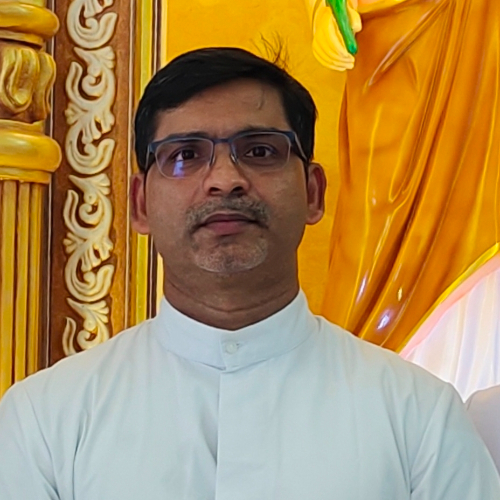
Fr. Manesh Jerald SJ
Sameeksha,
Indian Spirituality Centre,
Kalady.