Pentecost: A Promise Passed Down

The congregation recited the novena prayer of Pentecost, voices rising gently in the sweltering Dubai heat. The sacred words floated in the air, carried by unseen grace. Pentecost always stirs something deep within me—a bell that chimes softly in both heart and memory, drawing me back—not only to the Upper Room in Scripture, but to a rainy day many years ago, and to a lesson that quietly changed the course of my life.
I was fourteen then. Fresh from my 10th-grade exams. Carefree. Clueless. When someone asked about my career plans, I said “Commerce”—not out of ambition, but instinct. Or maybe, something deeper.
My father, a chartered accountant with kind eyes and quiet strength, flipped through the calendar and said, “The best day to begin is Pentecost.” He glanced at my mother and smiled, “That’s just two days away.”
That same day, under a grey sky, he walked out and returned with my very first accountancy textbook. On Pentecost morning, he placed his hand on my head, prayed a simple prayer, and began teaching me. Debit. Credit. Balance. Just the basics. But those words became something sacred.
Two days later, everything shattered.
He suffered a sudden cerebral haemorrhage. And just like that—he was gone.
The vibrant, healthy man who had planted my first seed of purpose became my greatest loss. A carefree girl was suddenly thrust into the open world—carrying a textbook and a broken heart.
But that one lesson—his first and last—became my lifeline. It wasn’t just about accounting. That day, unknowingly, he passed on something far greater: the sevenfold gifts of the Holy Spirit—wisdom, understanding, counsel, fortitude, knowledge, piety, and fear of the Lord. From that one entry in accountancy, I began to navigate life with the Holy Spirit as my mentor and guide. My balance sheet—of memories, of strength, of grace—began with that moment. And even through the toughest academic challenges, there was no looking back.
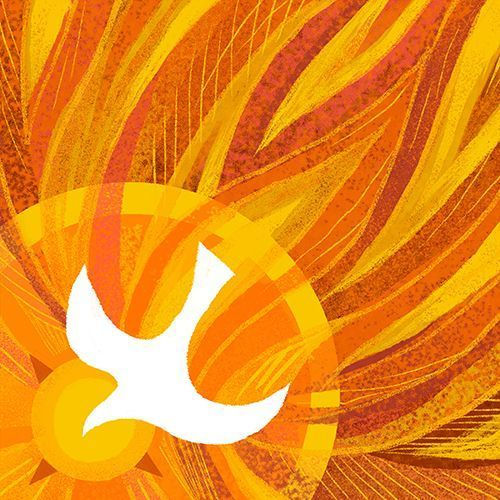
Every Pentecost since, I close my eyes and return to that moment. I think of the first Pentecost—timid disciples gathered with Mother Mary. Afraid. Uncertain. Surrounded by a hostile world. And then it happened: a rushing wind, a flame, and the Holy Spirit.

Everything changed.
I truly believe the Holy Spirit prompted my father that day. Why else would he feel such urgency to teach accountancy on that particular morning? Unless the Spirit was already at work.
That is how the Holy Spirit moves—quietly, purposefully, eternally.
Years later, my own daughter Marta—fourteen, thoughtful, so much like I was—sat across from me after church, her brow furrowed.
“Mum,” she said softly, “why does my mind go blank in exams? I study hard. But when the paper comes… I freeze.”
I smiled gently, because I’ve been there.
“There was one exam,” I told her, “Where I stared at the question and felt like crying. I had no clue what it meant. So, I prayed—just whispered, ‘Holy Spirit, help me.’ And you know what happened? The answer came—almost word for word. I wrote as if someone were guiding my hand.”
Marta’s eyes widened, a spark of wonder lighting up her face.
“That’s the Holy Spirit,” I said. “But He steps in when we’ve done our best—and when we’ve truly let go. We often say we’ve ‘given it to God,’ but still hold on to fear. Real trust means stepping out of the way and letting Him move.”
She nodded slowly, her faith beginning to root—quietly but surely.
I continued, “The beauty of Pentecost lies in this: the disciples didn’t suddenly become powerful. They became fearless. They didn’t gain crowns or kingdoms. They gained courage. They spoke in their own languages, and yet were understood by all—without Google Translate, and without fear. And they stood for Jesus to the very end and died as martyrs.”
“To follow Him,” I told her, “Is not to walk a secure path—but to walk a joyful one. It may not meet the world’s standards of success, but in the eyes of eternity, it is everything.”
Then I quoted Peter, from Acts 2:38–39:
“Repent and be baptized, every one of you, in the name of Jesus Christ for the forgiveness of your sins.
And you will receive the gift of the Holy Spirit.
The promise is for you and your children and for all who are far off—for all whom the Lord our God will call.”
I looked at Marta and said, “That promise is for you, my child. But like all great gifts, it comes with a condition. You must repent of your sins and remain faithful—no matter how high the cost. Great things in life always come with a price.”
I reminded her of another promise, from Galatians 5:22–23, where Paul speaks of the fruits of the Spirit:
“But the fruit of the Spirit is love, joy, peace, patience, kindness, goodness, faithfulness, gentleness, and self-control.”
“When you receive the Holy Spirit,” I told her, “You ’ll begin to experience these fruits—gently, slowly, but surely. They will become your strength.”
Her eyes gleamed with quiet enthusiasm—no longer anxious, but expectant.
She whispered, “I want to know Him too. I want the Holy Spirit to be my best friend.”
And in that moment, under the Dubai sun, on the shoulders of a story that began with my father, I saw the promise come alive again—in my daughter.